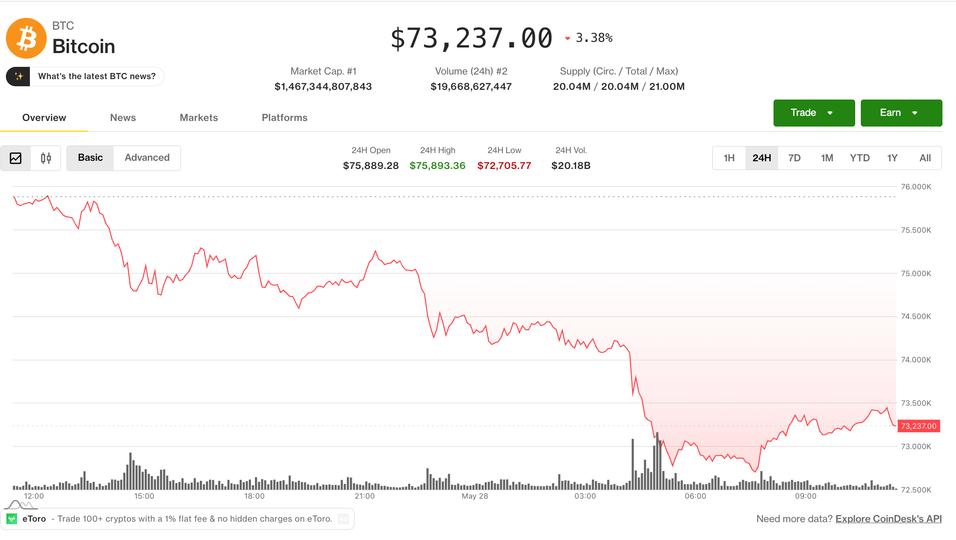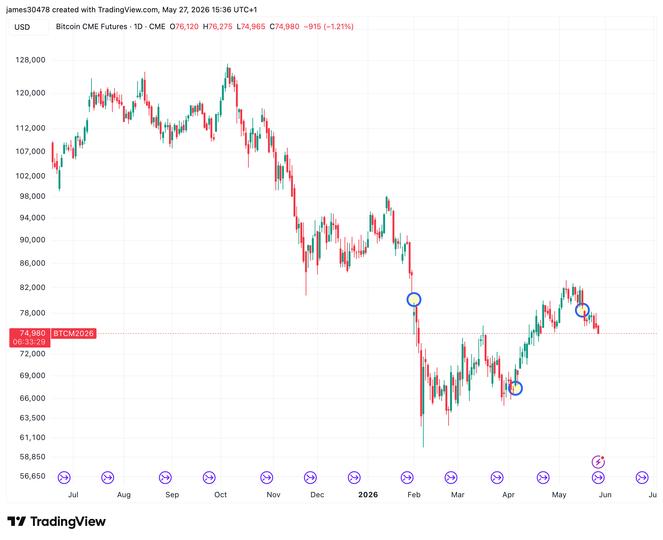
What Happened
Bitcoin's recent movements are making headlines as it approaches the closure of its well-known CME gaps, with three gaps remaining unresolved. The Chicago Mercantile Exchange (CME) gaps occur when the price of Bitcoin changes significantly between the time the CME closes for the weekend and reopens on Monday. This phenomenon has often been viewed as a potential indicator of future price movements, making the current situation particularly significant for traders and investors alike. The imminent closure of these gaps has sparked discussions about what this means for Bitcoin's price trajectory.
The CME gaps have historically been watched closely by market participants, given that they often act as support or resistance levels. As Bitcoin continues to move, the resolution of these gaps could give traders important clues about the cryptocurrency’s direction. With the crypto market buzzing about these developments, understanding the implications is crucial for anyone involved in Bitcoin trading or investment.
Why It Matters
The closure of Bitcoin's CME gaps is important because it could influence market sentiment significantly. Typically, when gaps are unresolved, they can create uncertainty, leading to price fluctuations as traders anticipate their eventual closure. This anticipation can generate buying or selling pressure, depending on the broader market conditions.
Fundamentally, the presence of CME gaps has led to speculation about price movements, as traders often believe that Bitcoin will return to these levels. If Bitcoin manages to fill these gaps, it may create a bullish sentiment, suggesting that the price could rise further. Conversely, failing to fill these gaps might lead to bearish sentiment, as traders could interpret it as a sign of weakness.
One non-obvious insight here is that the closure of these gaps could also affect the broader cryptocurrency market. When Bitcoin moves decisively, it often influences altcoins, as many traders view Bitcoin as a market leader. Thus, the resolution of these gaps could ripple through the entire crypto ecosystem, impacting everything from Ethereum to smaller altcoins.