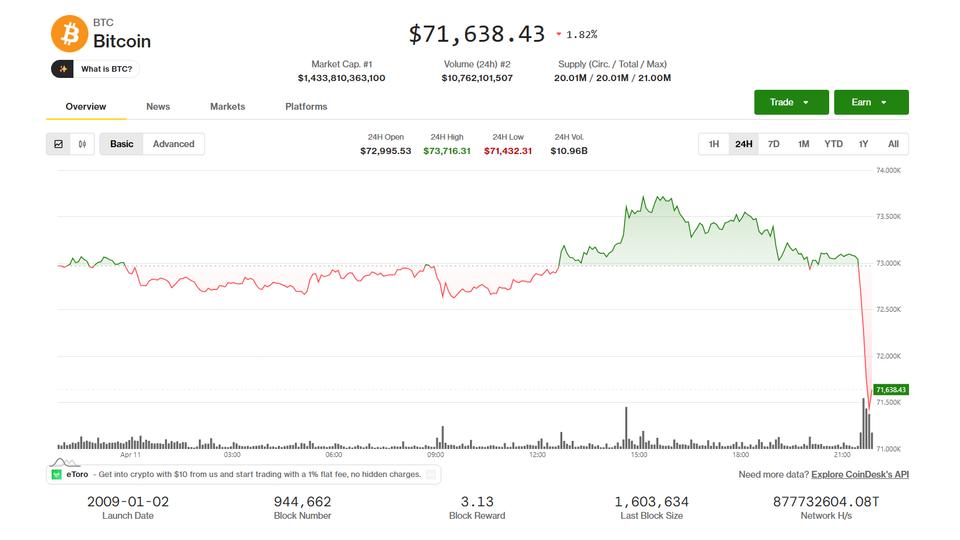
Bitcoin and Other Cryptos Plummet as U.S.-Iran Negotiations Stall
In a significant turn of events this week, the cryptocurrency market has experienced a notable decline, with Bitcoin leading the charge downwards. This downturn follows the collapse of diplomatic talks between U.S. and Iranian negotiators aimed at resolving ongoing military tensions. The failure to reach a consensus has stirred uncertainty in global markets, amplifying concerns among investors and traders, particularly those involved in digital currencies.
Background Context and Key Details
The relationship between the United States and Iran has been fraught with tension for years, but the current situation has escalated to a critical point. Diplomatic efforts aimed at de-escalating the conflict have been underway, with both sides engaging in negotiations that many hoped would lead to a ceasefire and a path toward lasting peace. However, reports indicate that the talks have broken down, leaving many to speculate about the potential for increased military actions in the region.
Against this backdrop, Bitcoin, the leading cryptocurrency, has seen a sharp decline in value, falling in tandem with other major cryptocurrencies. Investors are becoming increasingly wary of geopolitical risks, particularly in a landscape where digital assets are often viewed as a hedge against instability. The market's reaction underscores the sentiment that cryptocurrencies are not immune to external factors, including political developments.
Market Impact Analysis
The cryptocurrency market is notoriously volatile, and recent events have highlighted how sensitive it is to global geopolitical issues. As the negotiations faltered, Bitcoin's price dropped significantly, with other cryptocurrencies following suit in a broader market sell-off. This trend has prompted analysts to examine the correlation between geopolitical events and cryptocurrency performance.
Historically, moments of heightened tension in global affairs have led to fluctuations in crypto prices. Investors often seek refuge in traditional assets during times of uncertainty, which can result in a decline in demand for digital currencies. Furthermore, the lack of regulatory framework and the speculative nature of cryptocurrencies make them particularly vulnerable to market sentiment shifts.
As traders react to the news, many are urged to exercise caution, with some experts advising that the cryptocurrency market may face continued pressures as long as geopolitical tensions persist. Others suggest that this could be a temporary setback, with the potential for recovery if negotiations are revived or if a more stable political environment emerges.
Forward-Looking Outlook
Looking ahead, the outlook for Bitcoin and the broader cryptocurrency market will likely hinge on the unfolding geopolitical landscape. Analysts are closely monitoring any developments in the U.S.-Iran relationship, as renewed negotiations or unexpected resolutions could shift market sentiment dramatically.
Additionally, external factors, such as regulatory changes in major markets and economic indicators, will continue to play a crucial role in shaping the future of cryptocurrencies. As investors navigate this uncertain terrain, it will be essential for them to remain informed about both local and global events that could impact market dynamics.
The cryptocurrency market is known for its resilience, and while current conditions are challenging, many experts predict that it could bounce back as new opportunities arise. For now, however, the fall in Bitcoin and other crypto values serves as a reminder of the interconnectedness of global events and financial markets, underscoring the need for vigilance among investors in this rapidly evolving space.

