Bitcoin and Broader Market Hold Steady Amid U.S.-Iran Negotiations
In an atmosphere charged with geopolitical tension, Bitcoin and the broader market exhibited a notable degree of stability as negotiations between the United States and Iran commenced. The cryptocurrency, often viewed as a barometer of economic sentiment, managed to hold its ground, reflecting a cautious optimism among investors. As discussions aimed at addressing longstanding issues between the two nations unfold, market participants remain watchful, weighing the implications for both the financial landscape and international relations.
Background Context: U.S.-Iran Relations and Market Sentiment
The U.S.-Iran negotiations, which have been at the forefront of global political discourse, are primarily centered around critical issues including nuclear agreements and sanctions. These talks come at a time when tensions in the Middle East have heightened, prompting investors to reassess their strategies in an increasingly volatile environment. Historically, periods of diplomatic engagement have had mixed effects on financial markets, often leading to uncertainty as stakeholders await the outcomes.
Bitcoin, which has gained prominence as a digital asset and alternative store of value, reflects this complexity. Investors in the cryptocurrency space are acutely aware of how geopolitical developments can influence market dynamics. The digital currency is often viewed as a hedge against traditional financial instability, and its performance can be indicative of broader investor sentiment toward risk.
Market Impact: A Steady State Amid Uncertainty
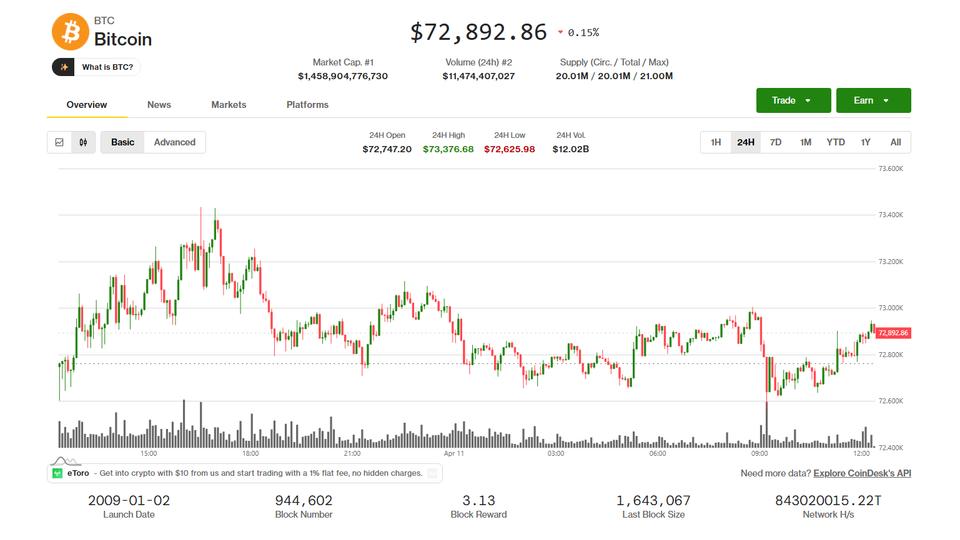
On the day that the negotiations began, Bitcoin remained relatively unchanged, hovering around its recent trading levels. This flat performance mirrors that of traditional financial markets, with major indices showing little fluctuation. Analysts suggest that while the diplomatic talks have the potential to influence market volatility, the current state reflects a collective wait-and-see approach among investors.
The broader financial landscape is also characterized by mixed signals. Economic indicators, such as inflation rates and employment figures, are contributing to a cautious outlook as market participants weigh potential future moves by central banks. In this context, Bitcoin's stability could be interpreted as a sign of resilience, particularly as institutional interest in the cryptocurrency continues to grow.
Furthermore, as the negotiations progress, there could be implications for oil prices and global supply chains, both of which are key factors in overall market performance. Any positive developments in the U.S.-Iran discussions could lead to a decrease in oil prices, influencing inflation and, by extension, the performance of various sectors within the economy.
Forward-Looking Outlook: Navigating Potential Outcomes
As the U.S.-Iran negotiations continue, market analysts are keeping a close eye on potential outcomes and their implications for both Bitcoin and the broader financial markets. Should the talks yield positive results, we may see increased investor confidence, which could lead to a rally in both traditional and digital assets. Conversely, a lack of progress or a breakdown in discussions could heighten market volatility, prompting investors to shift their strategies.
In the coming weeks, it will be crucial for market participants to monitor not only the developments in U.S.-Iran relations but also the broader economic indicators that could influence market sentiment. The interplay between geopolitical events and market dynamics is complex, and in times of uncertainty, Bitcoin may continue to serve as a refuge for those seeking to mitigate risk.
As discussions unfold, the financial community remains poised for potential shifts. Whether Bitcoin will emerge as a favored asset in times of geopolitical tension, or if it will be swayed by broader market forces, will depend on how the situation evolves. Investors are advised to keep a vigilant eye on both the negotiations and the accompanying economic indicators that could signal the next move in this ever-evolving landscape.