Market Overview
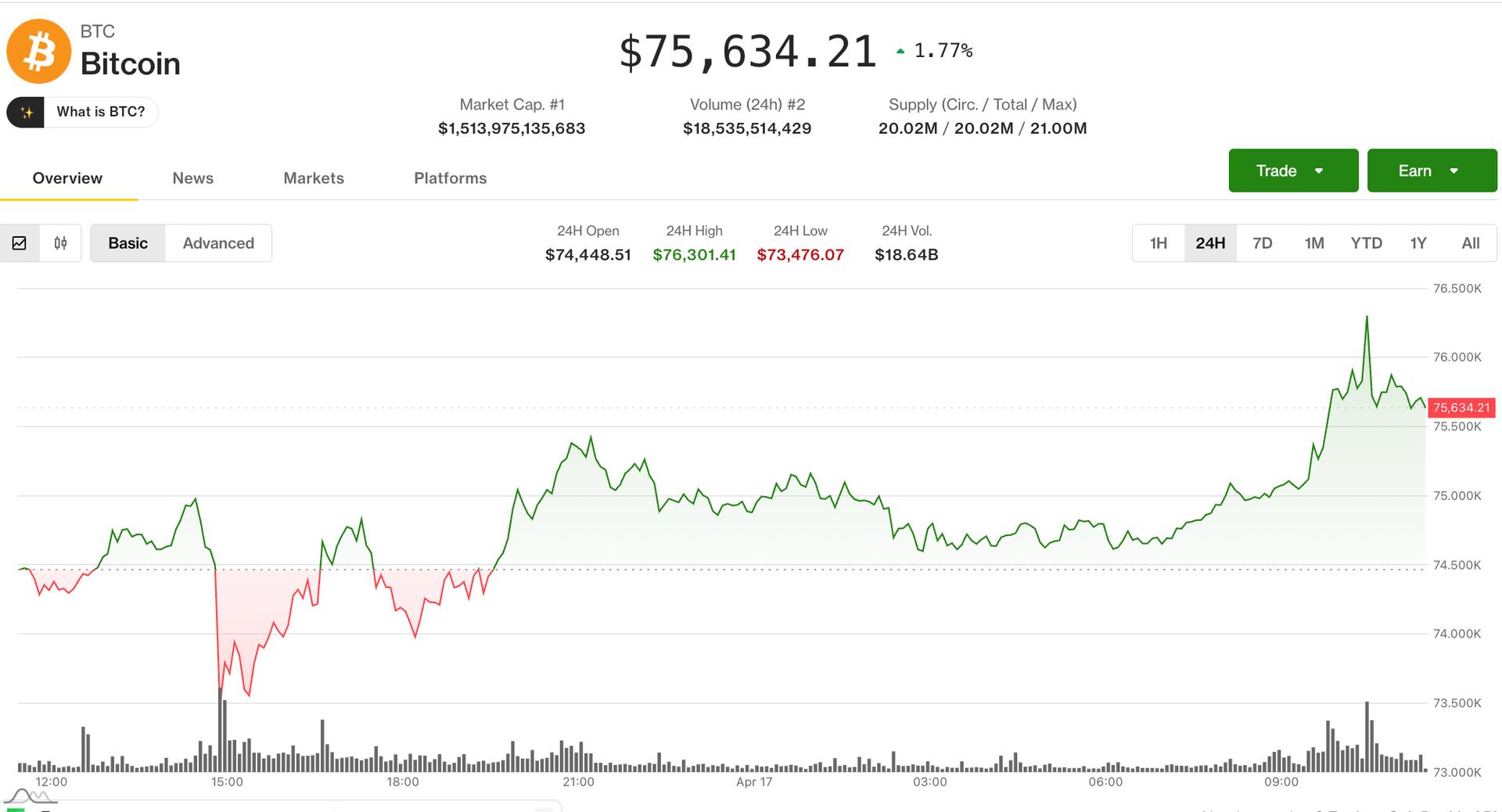
Bitcoin has hit a critical junction as it stalls below the $76,000 mark, a significant resistance level that traders are closely monitoring. The cryptocurrency's recent rally has been met with a formidable sell wall, amounting to approximately $450 million in sell orders, effectively capping any upward momentum. This resistance is not merely a hindrance; it represents a pivotal moment for traders who are navigating the volatile waters of cryptocurrency markets. With rising derivatives activity indicating mixed sentiment, traders must assess the potential implications of these dynamics on their strategies.
The current situation matters for traders right now because it highlights the balance of power between buyers and sellers in the market. The sell wall not only signals that many market participants are willing to take profits at these levels, but it also suggests a potential shift in market sentiment. As Bitcoin grapples with this overhead resistance, traders are on high alert for signs of either a breakout or a reversal, making this a critical moment for short-term trading strategies.
Technical & Fundamental Analysis
From a technical perspective, Bitcoin is currently testing the $76,000 resistance level, which has proven to be a formidable barrier in recent trading sessions. A breakthrough above this level could open the door to new highs, while a failure to breach it may result in a pullback. Traders should keep an eye on key support levels, particularly in the vicinity of $70,000, which could act as a safety net should selling pressure intensify.
Fundamentally, the market is witnessing a surge in derivatives activity, which has implications for both short-term price action and broader market sentiment. Increased open interest in Bitcoin futures and options suggests that traders are positioning themselves for volatility. However, with a significant number of liquidations occurring—often triggered by rapid price movements—there is a palpable sense of caution among market participants. This environment of heightened volatility can shift the supply/demand dynamics, especially if liquidations escalate further and lead to a cascading effect on price.

