What Happened
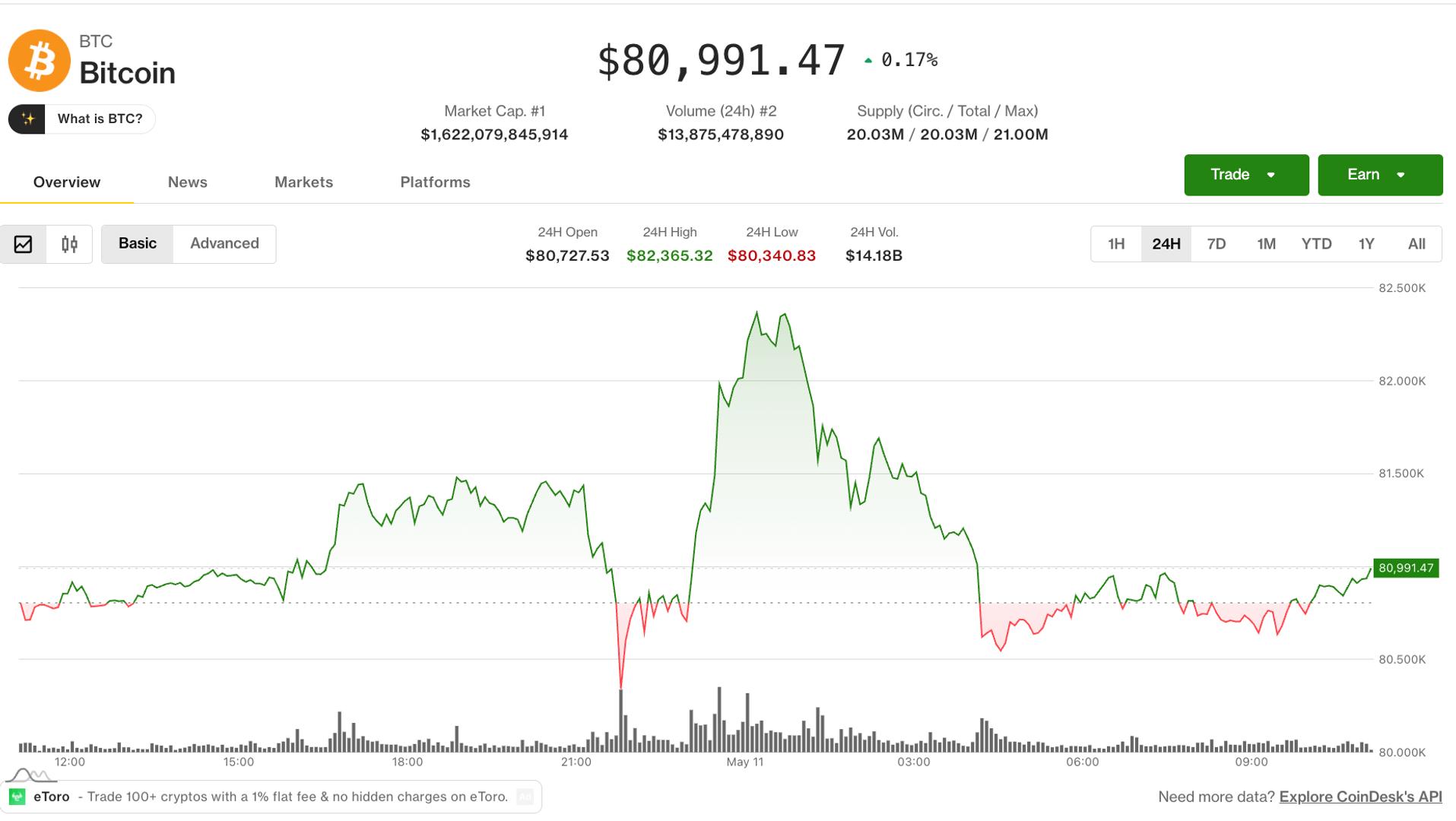
Bitcoin whipsawed dramatically today, briefly surging above $82,400 before falling back below $81,000 as traders reacted to the CME futures open and rising geopolitical tensions surrounding Iran. This volatility highlights the sensitive nature of the cryptocurrency market to external events, particularly those that could disrupt economic stability or investor sentiment.
The move came as the Chicago Mercantile Exchange (CME) opened its Bitcoin futures market, a moment traders closely monitor for potential price movements. The rapid rise and subsequent drop indicate a market in flux, where traders are actively repositioning their bets amid growing uncertainty. As geopolitical tensions have escalated in recent days, particularly concerning Iran, investors appear to be weighing the implications for risk assets like Bitcoin.
Why It Matters
The sharp movement in Bitcoin's price today underscores how external factors can rapidly influence cryptocurrency markets. Traders often look for support and resistance levels, and today's movements suggest that the $82,400 mark could serve as a new resistance level if the price continues to struggle to maintain bullish momentum. The fall below $81,000 may signal a shift in market sentiment, as traders could become more cautious during heightened geopolitical risks.
When events like tensions with Iran arise, they can lead to increased volatility in crypto markets as investors reassess their strategies. A significant geopolitical crisis can lead to a flight to safety in traditional assets, prompting a sell-off in riskier investments, including cryptocurrencies. Additionally, Bitcoin's recent surge had brought it close to all-time highs, making it particularly vulnerable to profit-taking during uncertain times.
It's also worth noting the broader implications for other cryptocurrencies and related sectors. For instance, declining confidence in Bitcoin often spills over into altcoins, causing similar price movements across the board.
Market Impact
Bitcoin's fluctuations today have ripple effects across various assets and sectors. As BTC experienced its whipsaw moment, other cryptocurrencies such as Ethereum and Litecoin also faced volatility, with many seeing price drops in tandem with Bitcoin's decline. The overall cryptocurrency market capitalization saw a noticeable dip as traders reacted to the situation.
Additionally, traditional markets are not immune to these dynamics. Stocks in sectors closely linked to technology and innovation, such as semiconductor firms or fintech companies, might see pressure as investors reassess risk appetites. The heightened geopolitical risks could lead to a broader market sell-off, affecting not just cryptocurrencies but also equities, commodities, and currencies like the U.S. dollar.
What Traders Are Watching
Active market participants are closely monitoring several key factors in the wake of today's volatility. Analysts are watching the $81,000 level for potential support; a rejection at this point could indicate a bearish trend where traders might anticipate further declines. Conversely, a breakout above $82,400 would suggest that the market is regaining bullish momentum, which could attract more buyers.
Moreover, traders are assessing the ongoing geopolitical situation with Iran, gauging how it might impact broader market sentiment. The question on traders' minds is whether the current tensions will escalate further, potentially creating a more significant risk-off environment that could negatively impact Bitcoin and other cryptocurrencies.
What Comes Next
Looking ahead, several catalysts could shape Bitcoin's trajectory in the coming days. Traders will be keenly awaiting any updates from geopolitical developments regarding Iran, as well as upcoming economic data releases that might signal broader market trends. Additionally, Bitcoin’s upcoming halving event later this year could also play a pivotal role in determining its long-term price direction.
In a bullish scenario, Bitcoin would need to establish a solid footing above $82,400 to regain upward momentum, while a bearish outlook may require prices to hold above $80,000 to prevent significant downward pressure. The next test for Bitcoin comes as traders continue to digest geopolitical news and economic data — until then, today's volatility remains the dominant force influencing the market.