Samsung Electronics Union Threatens General Strike Amidst Stalled Negotiations
The Samsung Electronics union has escalated tensions by announcing a potential general strike, marking a significant shift in labor relations as negotiations have reached an impasse. The union has declared, “We will not cease our actions until our demands are met,” and plans to initiate a large-scale strike next month. The company is preparing for legal action, making a direct confrontation between the two parties increasingly likely.
#
Announcement of Union Strength
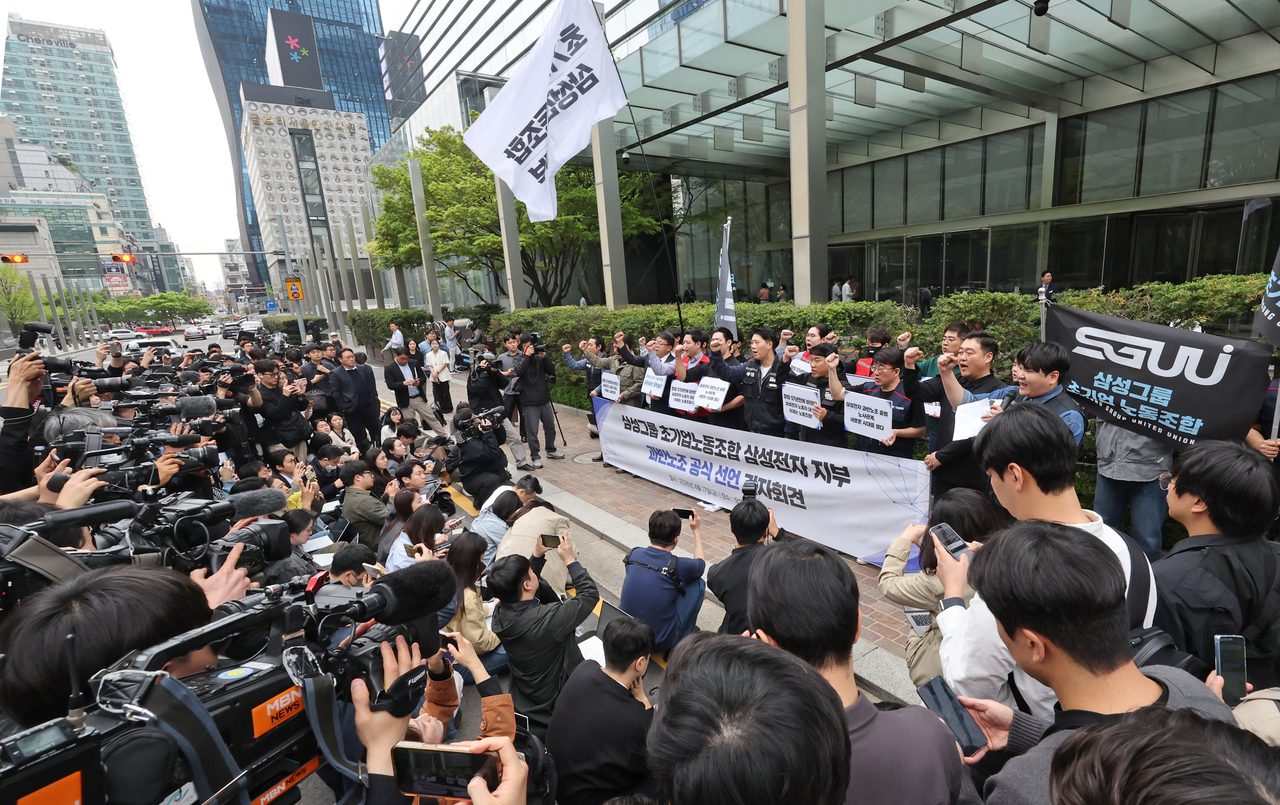
On the 17th of this month, in front of Samsung’s Seocho headquarters, the Samsung Group’s unified labor union held a press conference to publicly announce the achievement of “majority union” status. The union now boasts a membership of approximately 75,000, positioning itself to take the lead in negotiations.
#
Key Demands: Overhauling the Bonus Structure
The union’s demands are straightforward, centering primarily on restructuring the performance bonus system. They are advocating for 15% of operating profits to be allocated for performance bonuses and the elimination of the cap on the excess profit incentive (OPI).
The union has asserted, “If we are the number one company in the world, then our compensation should reflect that status.” This assertion is bolstered by recent trends of employees leaving for competitors such as SK Hynix and the global semiconductor firm Micron, which has been expanding its hiring in South Korea, raising concerns about talent attrition.
#
Scenarios of Escalation: Mass Mobilization Planned
The union plans to kick off large-scale protests on the 23rd, with a potential general strike commencing on May 21, which could extend for up to 18 days. The strategy is to maximize participation, particularly from the Device Solutions (DS) division, which is critical to Samsung’s operations. The union estimates that between 30,000 to 40,000 participants could gather for the protests.
The repercussions of a strike could be substantial. According to union estimates, if the strike materializes, it could result in daily losses of approximately 1 trillion won, with total damages potentially reaching 30 trillion won. This magnitude of disruption could extend beyond corporate risk to impact the global semiconductor supply chain.
#
Management's Response: Legal Action Initiated
Samsung is not backing down. The company has filed for a temporary injunction against the strike in the Suwon District Court, citing the potential for “management losses due to unlawful industrial action and impacts on the national economy.”
Conversely, the union has countered that “all procedures will be carried out legally,” maintaining that their actions are justified. The divide between the two parties remains significant, with little sign of compromise.
#
Internal Strife: The ‘Blacklist’ Controversy
As the strike approaches, internal discord has surfaced, particularly concerning allegations of a so-called “blacklist” of non-union members being circulated. The union has acknowledged some excessive actions in its efforts to increase membership, labeling these occurrences as “issues that arose during the process of member growth, recognizing that some aspects were inappropriate.”
#
Summary of Critical Points
- Union Gains Majority: The union has secured majority status, strengthening its negotiating position. - General Strike Planned for May 21: A potential general strike is anticipated to last up to 18 days. - Projected Economic Impact: Estimated losses could reach up to 30 trillion won. - Management's Legal Countermeasures: Samsung is seeking a court injunction to prevent the strike. - Key Dispute: The core issue revolves around the restructuring of the bonus compensation system.
#
Conclusion
As negotiations continue to falter, the stakes are high for both Samsung and its employees. The potential strike could not only affect the company’s financial standing but also reverberate throughout the semiconductor industry, which is already navigating a complex landscape. Investors and traders should closely monitor developments as this situation unfolds, given its implications for market dynamics and corporate performance within the tech sector.