What Happened
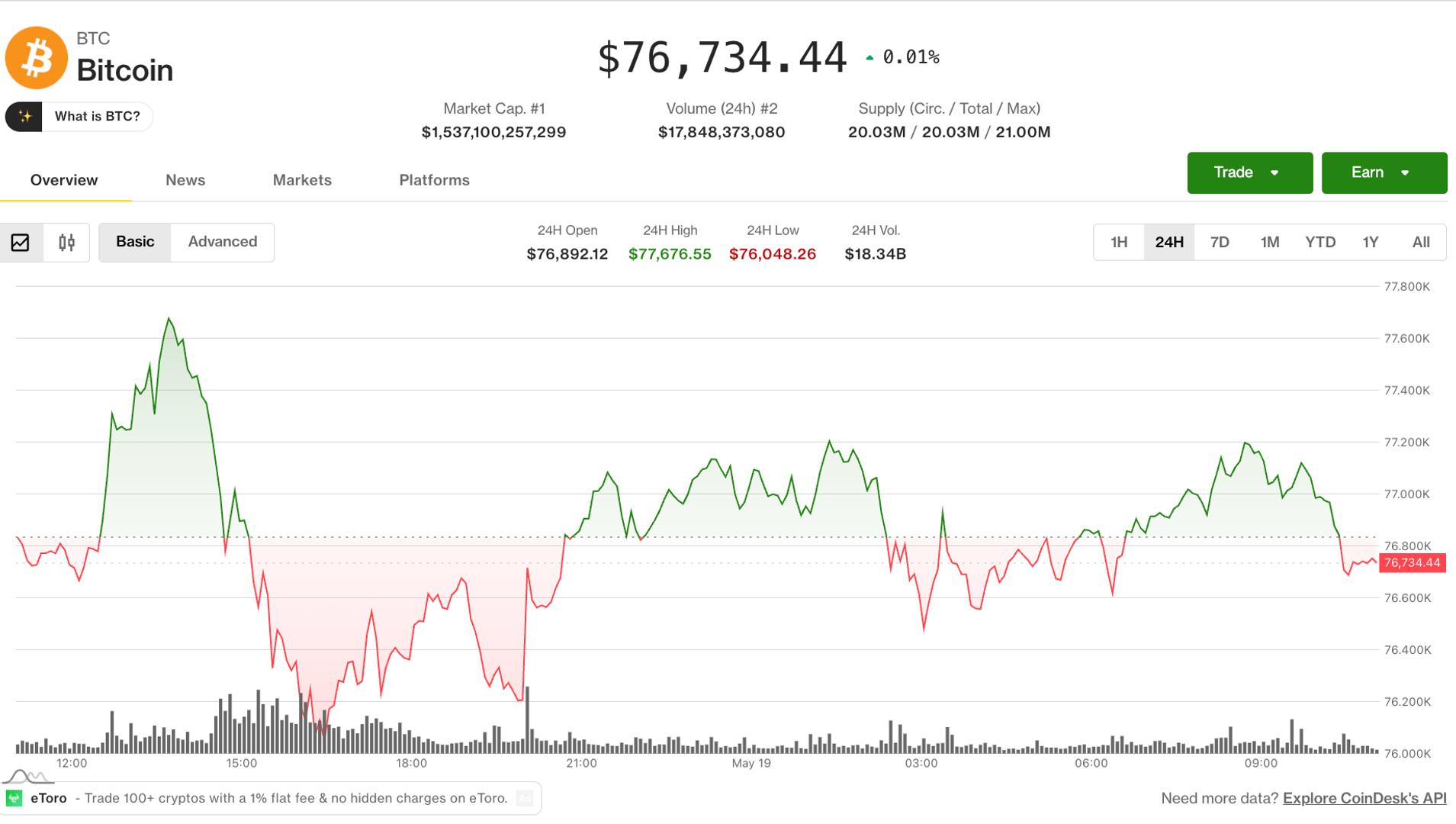
Bitcoin is holding steady near $76,800 as traders remain on edge, watching to see if the largest cryptocurrency can maintain its position amidst a broader retreat in speculative tokens. The price movement of Bitcoin is particularly significant as it approaches a pivotal monthly close, creating a critical moment for market participants who are analyzing its potential future direction.
Recent market trends show that while Bitcoin has shown resilience, many alternative cryptocurrencies, often referred to as altcoins, have experienced notable declines. This juxtaposition highlights a flight to safety among investors, who are increasingly favoring Bitcoin amid uncertainty in the broader cryptocurrency market. The focus now shifts to whether Bitcoin can hold above key resistance levels, specifically the line in the sand drawn by prominent market strategist Tom Lee, known for identifying crucial price points.
Why It Matters
The current stabilization of Bitcoin is essential for several reasons. First, its ability to hold steady near significant price levels is critical for maintaining investor confidence. A failure to maintain this position could lead to increased selling pressure, particularly among those who follow technical analysis closely. This situation becomes even more pressing as Bitcoin nears a monthly close, a time when many traders assess performance and adjust their strategies accordingly.
Market sentiment plays a crucial role in this context. As speculative tokens falter, many investors are likely to shift their focus back to Bitcoin, which is often viewed as a safer asset in the volatile cryptocurrency landscape. This shift can create a positive feedback loop, where increased demand for Bitcoin drives its price higher, further solidifying its status as the market leader.
Additionally, there are broader implications for the cryptocurrency ecosystem. If Bitcoin can hold its ground, it may encourage institutional investors to re-enter the market, potentially leading to a surge in trading volume. Conversely, a breakdown below critical support levels could prompt a wave of selling, further impacting altcoins and potentially destabilizing the market.
Market Impact
Bitcoin’s current consolidation near $76,800 has implications for various sectors within the cryptocurrency market. Altcoins, such as WLFI, have already shown signs of weakness, falling significantly as traders reassess their positions. The decline in altcoins often reflects a broader sentiment shift, as traders typically seek refuge in Bitcoin when uncertainty looms, leading to further drops in speculative assets.
Short-term reactions have been marked by volatility, with Bitcoin's price fluctuations drawing attention from both retail and institutional investors. As Bitcoin remains a focal point, other cryptocurrencies, especially those seen as riskier, are likely to face continued pressure. This trend underscores the interconnected nature of the cryptocurrency market, where Bitcoin often sets the tone for other digital assets.
Looking ahead, analysts are also watching for potential spillover effects into related sectors, such as blockchain technology and cryptocurrency exchanges, which may experience varying degrees of impact based on Bitcoin's performance.
What Traders Are Watching
Active traders are closely monitoring several key indicators as Bitcoin hovers near its current price level. A breakout above $78,000 could suggest a renewed bullish trend, while a rejection at $75,000 may indicate a shift towards bearish sentiment. This price range is becoming a focal point of discussion among market participants, who are keen to understand how Bitcoin will navigate this critical juncture.
Traders are particularly attentive to trading volume and market orders, as these metrics can provide insights into the strength of current price movements. The question on traders' minds is whether Bitcoin can maintain momentum without the support of altcoins, which have historically followed Bitcoin's lead.
What Comes Next
Looking ahead, upcoming catalysts such as regulatory developments, market sentiment shifts, and economic data releases will be crucial in shaping Bitcoin's trajectory. A bullish scenario would require Bitcoin to not only hold above current levels but also to attract renewed interest from institutional investors, driving prices higher. Conversely, a bearish scenario could emerge if Bitcoin fails to maintain its position, leading to increased volatility and potential declines.
The next test for Bitcoin comes at the end of the month when traders will closely analyze its monthly close — until then, the current dynamic of speculative weakness and Bitcoin's resilience remains the dominant force.